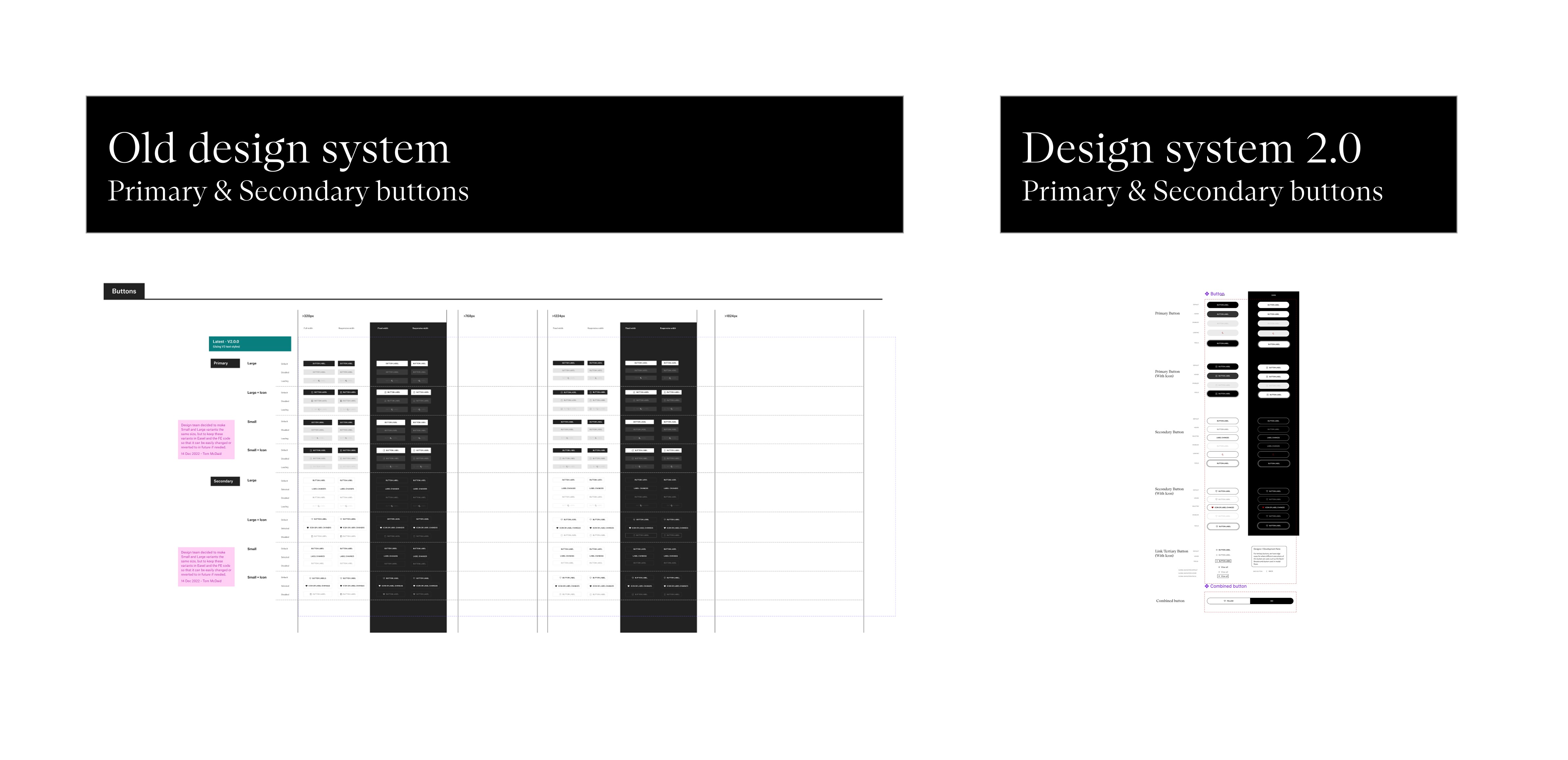
The problem: Rapid growth across platforms and teams had fragmented the design system into ten Figma files with inconsistent components, no clear variant management, and no documentation. Design was slowing down. The branding update made the existing system obsolete.
My role: Supported the rebuild of Easel 2.0 alongside the design and development teams. Auditing the existing system, establishing component structure, managing developer handoff, and driving adoption across 5 workstreams.
The outcome: Unified component library shipped to Storybook as the single source of truth across all teams. Measurably reduced design time and handoff friction allowing teams to focus on product work rather than recreating foundations.
Client
Christies
Role
Senior product designer
Year
2024
As the design team expanded, individual contributors worked on separate projects, adding and updating the design system without a formal structure. This led to inconsistencies in component creation and variant management, causing the system to become fragmented—spanning the DS into ten Figma files with multiple pages.
The lack of organization made it difficult to find components, slowing down workflows and reducing efficiency. At the same time, a branding update rendered the existing system outdated.
Recognizing this as an opportunity for improvement, we initiated the development of our design System called easel 2.0 while maintaining the legacy system to support a smooth transition until full migration was complete.
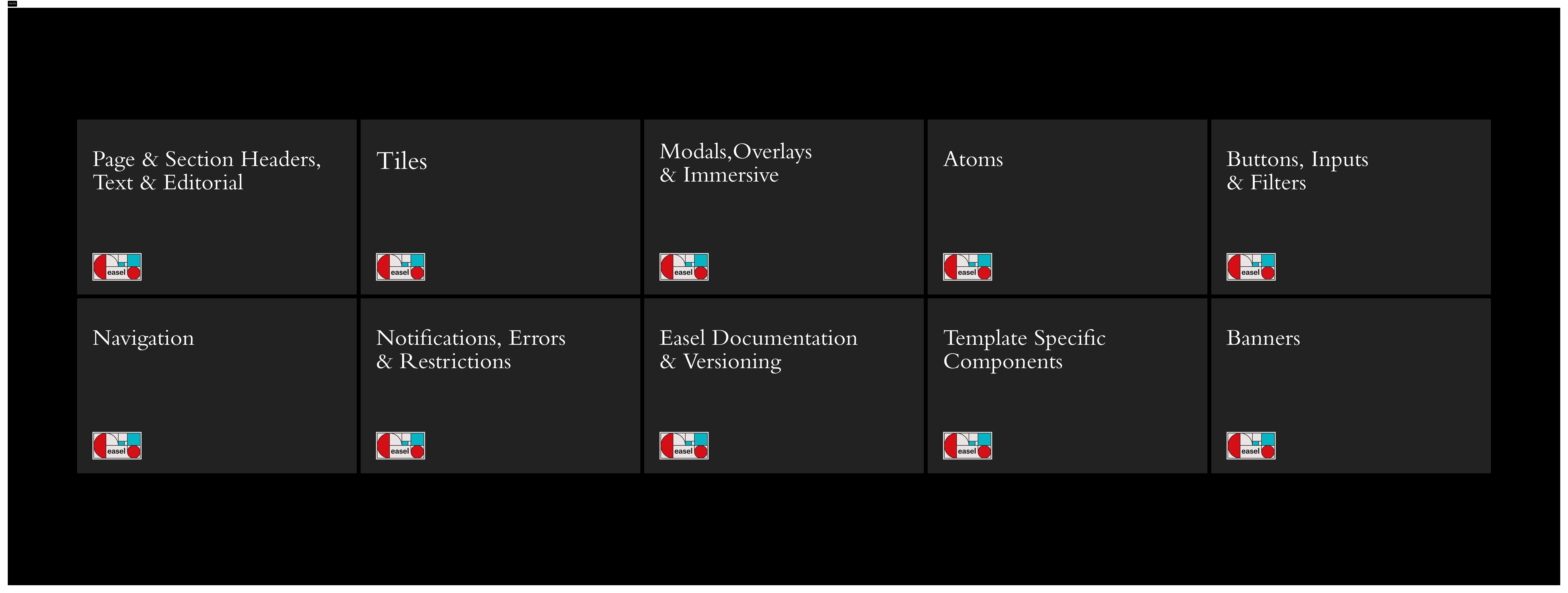
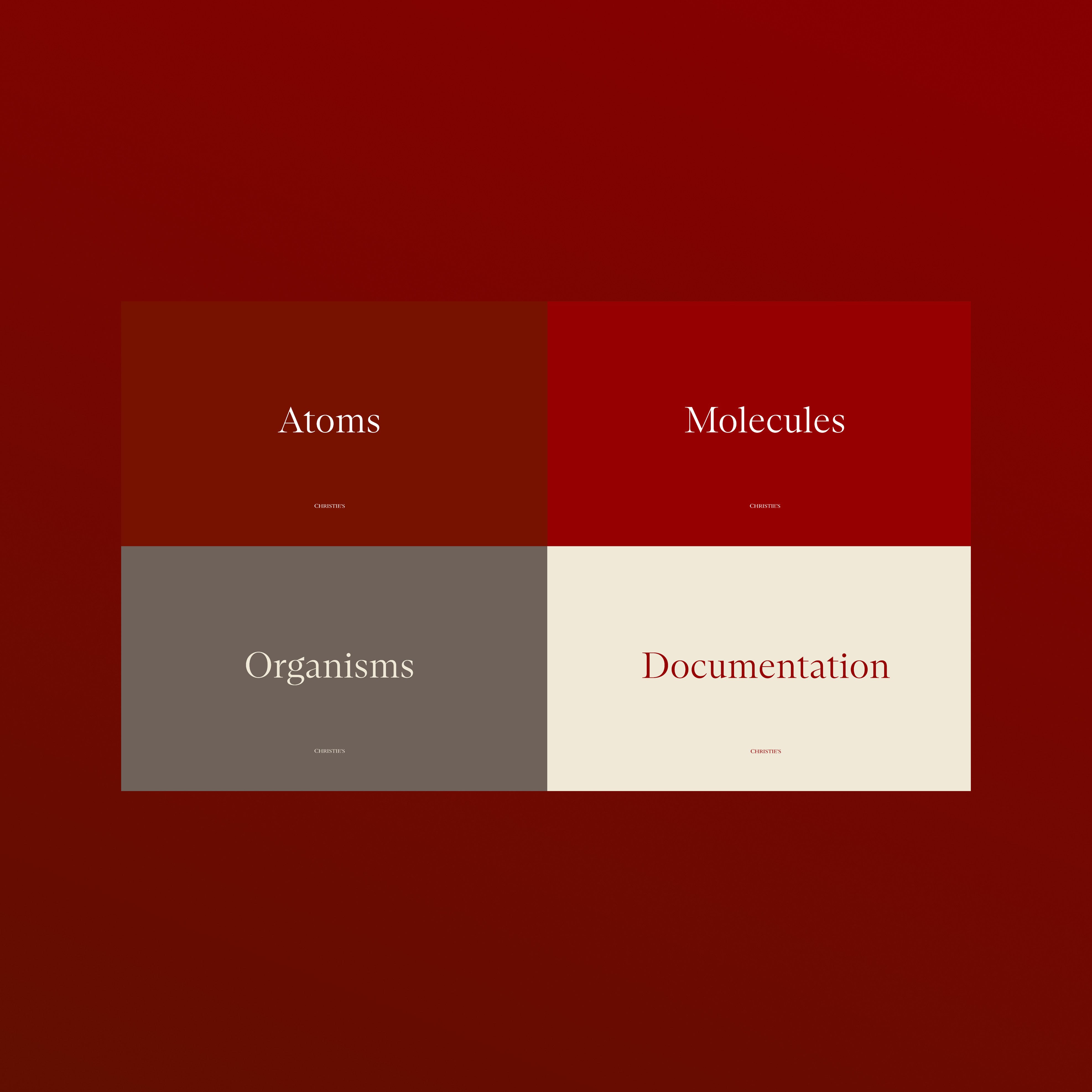
First step involved auditing the ten Figma design system files into four key areas:
➤ Atoms
Basic UI elements (buttons, icons, colors)
➤ Molecules
Small reusable design patterns
➤ Organisms
Larger, fully functional components
➤ Documentation
A central guide for designers and developers
We then transitioned the components using Figma best practices (simplifying structure and reducing variants) to establish a solid foundation for the system.